If you have followed my blog, you know that my focus for the past several years or so has been promoting design patterns and best practices for Power BI in an enterprise environment. In 2020 and 2021, I published a blog series called Doing Power BI the Right Way-For Enterprise Reporting. The essential patterns are still the same but Microsoft Fabric (which really is the modern evolution of the Power BI platform) now gives every organization, large and small, the opportunity to use Power BI at-scale, enable AI conversational reporting, with data governance and IT DevOps & deployment practices. The fact is that patterns for correct and durable design will work for organizations of all sizes as long as they are applied in a “right-sized” and scalable manner.
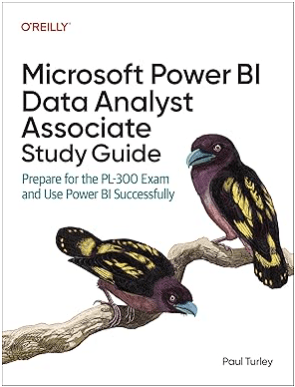
My new book “Microsoft Power BI Data Analyst Associate Study Guide” from O’Reilly Press is really two books in one. When O’Reilly approached me about writing a study guide for the PL-300 exam, one of the most popular Microsoft certification exams, I said that I wanted to be a two-part book to help exam candidates join the thriving Power BI community followed by a guide for using Power BI in real-world applications in accordance with industry best practices. The second half of the book is focused on how to apply best-practice design after learning the Power BI building blocks. Some of the content in the second half of the book is updated and elaborated material from earlier blog posts and 2025 posts I will reference in this blog series. As of this post in January 2026, the online book is available as an early release through the O’Reilly subscription service and scheduled to be delivered through booksellers like Amazon early this year.
Power BI for Fabric: A fresh start in 2026
Fabric changes everything – and nothing. If you have been developing enterprise-ready Power BI solutions the right way, moving to Fabric is an easy “next step” transition that opens doors for more scalable solutions. For those who have not yet designed enterprise-ready Power BI solutions, moving to Fabric provides the opportunity to embrace scalable design patterns and move Power BI into the modern age, to support next-generation capabilities (like scale, governance, AI conversational reporting, like true versioning, CI/CD and DevOps, deployment management, “upstream” transformations and “live” delta-backed Direct Lake model storage.)
Expert community leaders: authors, bloggers and MVPs, have written at lot about using Power BI the right way over the past decade. Power BI has long been the redheaded stepchild of the IT industry because it appeals to a vast audience consisting of both IT professionals and non-technical, business-focused analysts and report designers. But in the past, making Power BI work in scalable, enterprise-grade solutions has been a matter of working around many of its default settings and learning tricky techniques to make it work with IT-centric tools version control, deployment frameworks and development tools. With Fabric now in its second year of general availability, Power BI has finally come of age and is truly ready for the enterprise.

Bravo. I’ve got an O’Reilly subscription turned on, so I’ll take a look.